 |
| Photo Credit: patrickwanis.com |
In the 1960's, scientist Stanley Milgram developed an electric shock experiment which resulted in showing that people will obey even the most ridiculous orders if they are told what to do under authority.
In 1961, psychology professor Stanley Milgram advertised in the New Haven Register, "We will pay you $4 for one hour of your time, asking for 500 New Haven men to help us complete a scientific study of memory and learning." Over the course of 2 years, hundreds of people showed up to Milligram's lab eager to be involved in the memory and learning experiment - which was not about memory or learning at all.
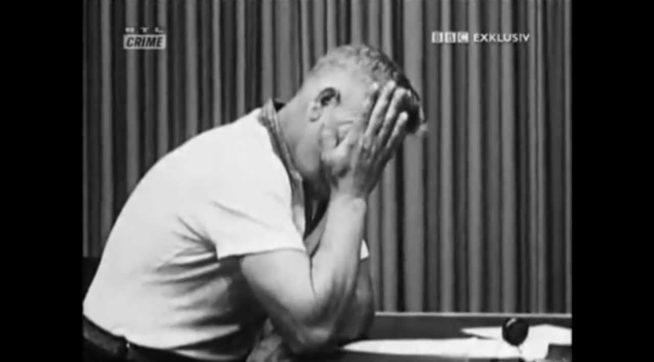
Milgram would watch as the volunteer (in the study known as the "teacher") would read aloud words to his partner - known as the "learner." The learner was hooked up at an electrical shock machine in a separate room. Each time the learner messed up on repeating the words, the teacher was told to deliver a series of shocks which increased in intensity as the learner continued to mess up. The volts started at 15, labeled as "slight shock" and going all the way up to 450 volts, labeled as "severe shock." A few people, traumatized about what they were being asked to do, removed themselves from the study, even though Milgram urged them to continue. On the other hand, many people delivered the shocks all the way up to 450 volts even though their partner (the learner) begged it to stop. As a result, 65% of people went all the way to 450 volts.
It was only until after the experiment, that the teacher found out that the shocks were fake and the screaming cries for help was pre-recorded. The learner was auditor, Jim McDonough, sitting very alive and unharmed in the separate room. The volunteers were also unaware that they had been used to later make Stanley Milgram's claim famous: that ordinary people, under the direction on an authoritative figure, would obey just about any order they were given, even if it involved torture.
 |
| Photo Credit: patrickwanis.com |
Later research proved that his debriefing session was hardly comforting. He told patients it was all fake, but many participants left quickly after the session ended, leaving upset and confused. His sessions were used primarily to calm down the very angry volunteers, in which there were many. A large portion learned the truth some years later in letters. Others appeared to have never known the truth at all.
So the controversy is, was this experiment ethical? Was it right or wrong for Stanley Milgram to use this deception to find obedience in people? Many argue it was beautiful and brilliant and others think it was just plain wrong. What do you think?
I know this has no real relation to school, but it is one of the most famous studies in the field of Psychology. I learned about it briefly in my Psych 101 course this semester and thought it was perfect to use as a controversy topic. It is very interesting, and I think many others will think so too. After researching, it became even more interesting to me. It's hardly talked about in my Intro to Psych book, so much of information comes from online sources. Overall, I love this controversy.
Sources:
https://www.theatlantic.com/health/archive/2015/01/rethinking-one-of-psychologys-most-infamous-experiments/384913/https://psmag.com/social-justice/electric-schlock-65377




No comments:
Post a Comment